Upcycled Homeware and Bamboo Furniture: A Sustainable Business Opportunity
As more consumers become interested in sustainable living, eco-friendly home products are gaining attention in the furniture and home decor market. From recycled wood shelves and coconut shell lamps to handcrafted bamboo tables and modern decorative pieces, sustainable homeware offers entrepreneurs an opportunity to build a business while supporting local craftsmanship and reducing waste.
For aspiring entrepreneurs in the Philippines, an upcycled homeware and bamboo furniture business can be started on a small scale by partnering with local artisans, sourcing affordable materials, and selling products through online marketplaces, social media, retail stores, or even international buyers.
What Is an Upcycled Homeware Business?
Upcycling involves transforming discarded, unused, or leftover materials into new products with greater value, functionality, or aesthetic appeal. Instead of throwing away old wood, coconut shells, bamboo scraps, or other materials, these resources can be converted into useful and attractive home furnishings.
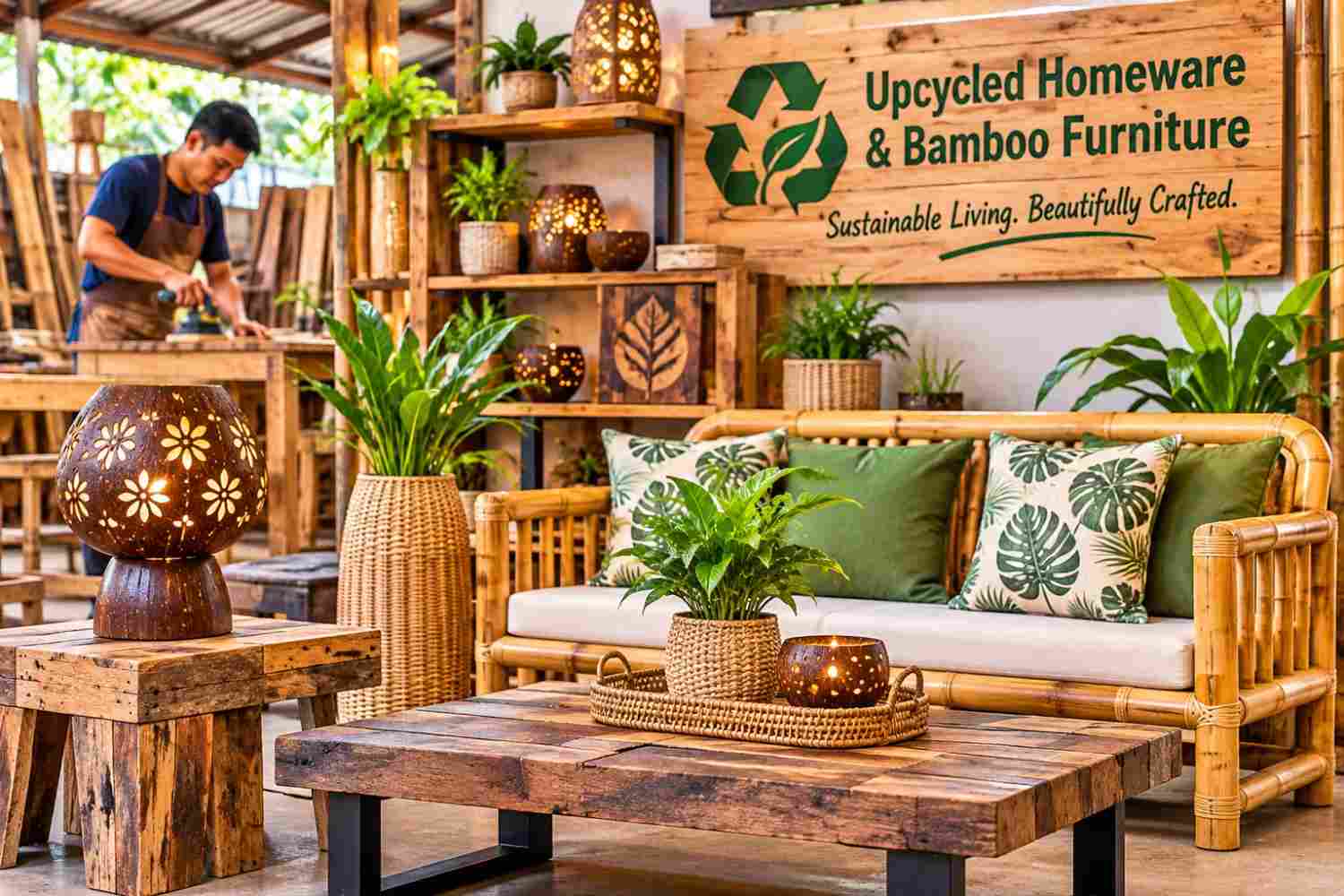
Examples include turning reclaimed wooden pallets into coffee tables, discarded lumber into wall shelves, coconut shells into decorative lamps, and bamboo into chairs, plant stands, organizers, and dining accessories.
Unlike businesses that simply sell recycled materials, an upcycling business focuses on creativity, craftsmanship, quality, and design. The finished product should look intentional, modern, and attractive enough for customers to display in their homes, offices, restaurants, or vacation properties.
Products You Can Create and Sell
Entrepreneurs do not need to manufacture large furniture pieces immediately. Starting with smaller home decor products can make the business easier to manage and require less capital.
- Bamboo furniture: Chairs, stools, coffee tables, side tables, benches, and compact outdoor furniture.
- Reclaimed wood furniture: Floating shelves, console tables, desks, storage cabinets, and rustic dining tables.
- Coconut shell homeware: Decorative bowls, lamps, planters, candle holders, and accent pieces.
- Home organization products: Bamboo organizers, kitchen storage containers, desk accessories, racks, and wall-mounted storage.
- Decorative wall pieces: Wooden wall art, framed designs, handcrafted signs, and textured decorative panels.
- Custom home accessories: Personalized furniture, customized gifts, and decor made according to a customer’s preferred size, color, or design.
Products that are compact, lightweight, and easy to package may be particularly attractive for online selling because they can reduce delivery and shipping complications.
Partner With Local Artisans
One practical way to start this business is to work with experienced carpenters, bamboo craftsmen, furniture makers, and local artisans instead of immediately investing in a complete workshop.
The entrepreneur can focus on product development, branding, marketing, customer service, sourcing materials, and selling, while the artisans handle manufacturing and finishing. This arrangement can help reduce startup expenses while creating opportunities for skilled workers in the community.
Look for artisans who can consistently produce quality products, follow measurements, meet agreed deadlines, and accommodate custom designs. Before accepting large orders, create prototypes and test the quality of the finished items.
Written agreements covering product specifications, production costs, delivery schedules, ownership of designs, and payment terms can help avoid misunderstandings as the business grows.
Where to Source Sustainable Materials
Material sourcing can become one of the competitive advantages of this business. Entrepreneurs may explore partnerships with construction companies, furniture shops, woodworking businesses, coconut processors, bamboo growers, farms, and local suppliers.
Potential materials include reclaimed hardwood, unused lumber, bamboo, coconut shells, wood offcuts, and other suitable natural materials. However, materials must be carefully inspected before use, especially if they will be used for furniture, kitchen products, or items intended for indoor environments.
Reclaimed wood should be checked for structural damage, pests, contamination, nails, and other hazards. Bamboo should be properly treated, dried, and finished to improve durability and reduce the risk of insect damage or mold.
For products marketed as sustainable, avoid making environmental claims that cannot be verified. Being transparent about where materials come from and how products are made can help build customer trust.
How to Sell Your Products
A sustainable homeware business can target several customer groups, depending on the quality, design, and price of its products.
- Online marketplaces: Sell small home decor items, organizers, plant stands, and handcrafted accessories through popular e-commerce platforms.
- Facebook and Instagram: Showcase finished products, workshop videos, before-and-after transformations, and customer photos.
- Local malls and retail stores: Approach home furnishing stores, gift shops, lifestyle boutiques, and specialty retailers for consignment or wholesale arrangements.
- Hotels and restaurants: Offer custom furniture, decorative accents, bamboo fixtures, and sustainable interior accessories for hospitality businesses.
- Interior designers: Build relationships with designers, architects, and contractors who may need customized furniture or decor for residential and commercial projects.
- Export markets: Explore international buyers interested in handcrafted, tropical-inspired, sustainable, and locally made home products.
For export opportunities, entrepreneurs must consider product standards, packaging requirements, shipping costs, customs documentation, and destination-country regulations. Starting with smaller decorative items may be easier than shipping bulky furniture internationally.
Startup Capital and Potential Expenses
The required investment depends on whether the business operates as a small online shop, a product design and marketing business working with artisans, or a full furniture production workshop.
A small operation may initially need funds for product samples, raw materials, artisan labor, finishing supplies, packaging, photography, marketing, transportation, and basic tools. If the entrepreneur works with existing craftsmen, there may be no immediate need to rent a large workshop or purchase expensive woodworking equipment.
Instead of producing a large inventory, consider using a made-to-order model. Customers can choose from a catalog of designs, pay a deposit, and have their items produced after an order is confirmed. This approach can help reduce unsold inventory and improve cash flow management.
Pricing should include material costs, labor, finishing, packaging, delivery, marketplace fees, overhead, and a reasonable profit margin. Handmade and customized products should not be priced based on materials alone because the craftsmanship and time involved are also part of their value.
Marketing Your Sustainable Homeware Brand
Customers are often attracted to products that have a story behind them. Explain how reclaimed materials are transformed, introduce the artisans who create your products, and demonstrate how the finished pieces can be used in modern homes.
Short videos showing the transformation of old wood into a stylish table or bamboo into a functional organizer can be effective marketing content. High-quality photographs, simple product descriptions, clear measurements, customer reviews, and transparent pricing can also help buyers make purchasing decisions.
Consider offering collections with consistent designs and colors rather than selling unrelated products. For example, a minimalist bamboo collection, tropical home decor collection, rustic reclaimed wood collection, or eco-friendly kitchen accessories collection can make your brand more recognizable.
Challenges to Consider
While this business offers opportunities, entrepreneurs should also prepare for challenges. Reclaimed materials may not always be available in consistent sizes or quality. Handmade production can take longer than expected, and custom orders may require more labor than originally estimated.
Furniture products also need to be durable, safe, and properly finished. Poor workmanship, unstable furniture, rough edges, or inconsistent quality can lead to customer complaints and costly returns.
Start with a manageable product line, establish quality standards, test your products, and maintain clear communication with your artisans and customers. As demand grows, you can gradually expand production and introduce higher-value products.
Is This Business Worth Exploring?
An upcycled homeware and bamboo furniture business offers a creative way to combine entrepreneurship, sustainability, and local craftsmanship. It can begin with a few carefully designed products and grow into a recognizable home decor brand serving individual customers, retailers, hospitality businesses, and potentially international markets.
The key is not simply to make products from recycled or natural materials. It is to create attractive, functional, durable, and well-designed items that customers are willing to pay for. With the right artisans, reliable suppliers, effective marketing, and careful cost management, sustainable homeware can become a promising business opportunity for entrepreneurs looking to enter the home improvement and furniture market.

- Upcycled Homeware and Bamboo Furniture: A Sustainable Business Opportunity - November 27, 2026
- Hyper-Personalized Gifting & Printing: A Profitable Small Business Idea in the Philippines - November 25, 2026
- Mobile Specialty Coffee & Artisanal Carts: A Promising Business Opportunity in the Philippines - November 23, 2026